Last reviewed: July 2026 · How we research these costs · Trade body: Registered Master Builders
A driveway is one of those things nobody looks at twice until it stops doing its job — the car scrapes on a slab that’s lifted, weeds shove up through a cracked joint, or a decent downpour turns the whole approach into a shallow pond by the letterbox. That’s usually when the phone rings.
My name’s Craig Sutherland, and I’ve spent the better part of 18 years pouring and repairing concrete around Papakura and the rest of south Auckland — Takanini, Opaheke, Addison, and the older streets closer to the town centre. This isn’t a sales pitch, it’s what I actually walk people through on site: why concrete suits the ground down here, what the job really involves, and what’s worth weighing up before you start collecting quotes.
Key takeaways
- On Papakura’s clay-heavy sections, concrete laid over a properly compacted base copes with seasonal ground movement far better than loose aggregate or a thin skin of asphalt.
- The base is where a driveway succeeds or fails — a thin or badly compacted base is the number-one reason slabs crack early, and it’s the part nobody sees once the job’s done.
- Three finishes cover most jobs: broom (the budget workhorse), exposed aggregate (grip on sloped drives), and coloured or stamped (decorative work).
- A standard residential driveway takes about a week, weather permitting — foot traffic after 2–3 days, a car after 7, longer for a boat or caravan.
- A like-for-like replacement often doesn’t need building consent, but a new or altered vehicle crossing or drainage change can — worth confirming with Auckland Council before work starts.
- I won’t put a price on a driveway sight unseen. Get two or three itemised quotes and compare slab thickness, base depth and mesh spec, not just the bottom line.
In this guide
Why Papakura’s clay soil chews through a bad driveway
Papakura sits at the southern end of Auckland, postcode 2110, and it’s grown fast — the wider area is home to roughly 48,000 people now, with subdivision happening across older pockets and newer developments like Addison and Opaheke alike. That growth matters for driveways, because a lot of these sections sit on clay-heavy soil that holds water and shifts with the seasons. I’ve dug up enough failed driveways to know that concrete, laid on a properly compacted base, copes with that movement far better than loose aggregate or a thin skin of asphalt.
Climate does the rest of the damage. Humid summers, wet winters, and the odd squall that dumps a month’s rain in an afternoon — concrete sheds that water fast once it’s graded correctly, and it doesn’t go soft in the heat the way asphalt can. It’ll also carry the weight of a boat trailer, a work ute, or a caravan without rutting, which matters in a suburb where plenty of driveways are carrying more than the family hatchback.
There’s a value side to this too. Papakura’s median house price sits around NZD 0.92M, so it’s a serious asset, and buyers notice the driveway before they’ve reached the front door. A patchy, cracked run reads as a house that’s been let go. A solid concrete one is a modest spend next to what the property’s worth, and it’s one of the few improvements a buyer clocks from the street.
The three finishes I put down most
Most homeowners land on one of these once I’ve talked them through what suits their section:
- Standard broom finish — the workhorse. Non-slip, does the job, easiest on the budget.
- Exposed aggregate — small stones brought up to the surface for grip and texture. I lean toward this on sloped drives where wet-weather traction actually matters.
- Coloured or stamped concrete — where the driveway’s also doing decorative work, tying in with the house and fencing.
Here’s roughly how the three stack up once you weigh cost against how the driveway actually gets used:
| Finish | Where it suits | Worth knowing |
|---|---|---|
| Standard broom finish | Everyday driveways on a budget | Non-slip and hard-wearing; the cheapest of the three and the easiest to patch down the track |
| Exposed aggregate | Sloped drives where wet-weather grip matters | Stones brought to the surface for texture; hides marks and costs more than broom, but matching a repair patch is harder |
| Coloured or stamped concrete | Driveways doing decorative work | Ties in with the house and fencing; the highest cost and upkeep, and it reads more at home on the newer subdivisions |
Whichever finish you pick, the scope usually stretches to drainage — channel drains, correct falls away from the garage and the house, tying into the existing stormwater — and cutting proper control joints so the slab cracks where it’s meant to, not wherever it feels like. If the job touches the vehicle crossing onto the road, or sits close to a boundary, that paperwork needs sorting before the truck turns up, not after.
How the job actually runs, start to finish
A concrete driveway isn’t a same-day job, and knowing the sequence makes the timeline make sense.
- Site visit and quote — measuring up, checking the fall of the land, checking truck access, asking how you actually use the space.
- Consents and crossings — a straightforward like-for-like replacement usually doesn’t need a building consent, but a new or altered vehicle crossing, retaining work, or significant drainage changes can. Worth checking Auckland Council’s own page before anything starts: aucklandcouncil.govt.nz/building-and-consents.
- Excavation and base — old surface out, ground dug to depth, compacted metal base in. Nobody sees this bit in the finished job, but it’s where a driveway succeeds or fails — a thin or badly compacted base is the number-one reason driveways crack early.
- Boxing and steel — timber boxing sets the edges and levels, mesh or reinforcing steel goes in to hold the slab together.
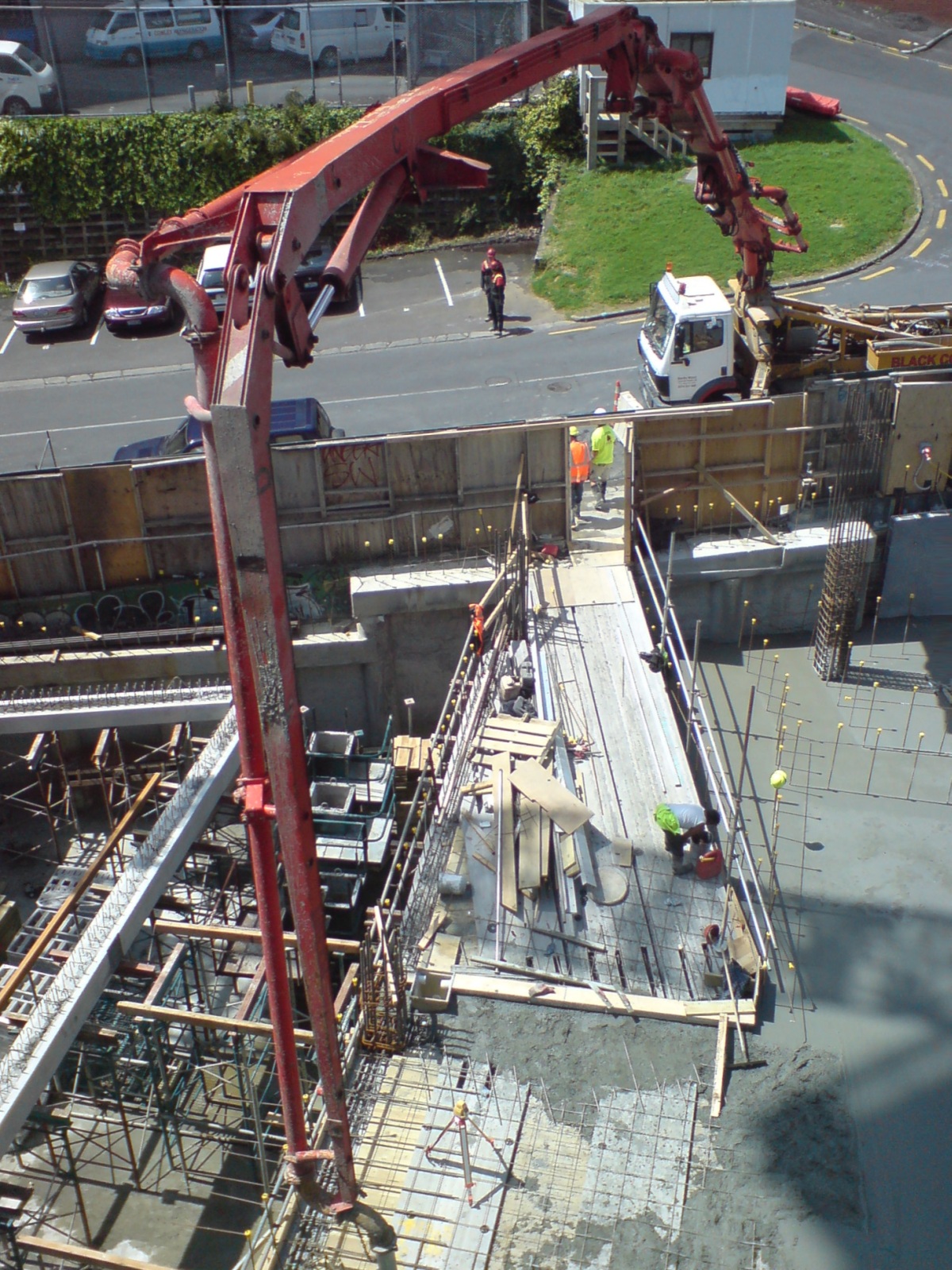
- Pour and finish — the mix arrives, gets placed, levelled, and finished to whatever texture you’ve chosen. The crew works to the concrete’s clock here, not the calendar.
- Curing and cutting — control joints get cut in, then it’s left to cure. Concrete picks up most of its strength in the first week, though it keeps hardening for weeks after.
Start to finish, a standard residential driveway usually takes about a week, weather permitting. Rain on pour day or a cold snap can push that out.
The one part I’d flag early is the paperwork, not the pour. If a new or altered vehicle crossing needs sign-off, that approval is often the longest lead time in the whole job — so it’s worth getting it moving well before you want the concrete down, rather than having a boxed-up driveway waiting on a form.
Quick facts
| What | Detail |
|---|---|
| Location | Papakura, Auckland — postcode 2110 |
| Wider area population | Roughly 48,000 |
| Median house price | NZD 0.92M |
| Typical job duration | About a week, weather permitting |
| Wait before foot traffic | 2–3 days |
| Wait before parking a vehicle | 7 days (longer for boats/caravans) |
| Expected lifespan | 30+ years with good base prep |
What actually moves the price
I won’t quote a number here, because anyone who does before seeing your section is guessing. What actually shifts a quote up or down:
- Size and shape — a straightforward rectangle is cheaper per square metre than a curved or awkward layout with lots of edge work.
- Finish — broom finish is the baseline; exposed aggregate, colour, and stamping each add cost.
- Groundwork — a poor existing base, a slope that needs correcting, or an old surface to break out and cart away all push prep costs up.
- Access — a tight section a truck can’t reach easily means more labour barrowing or pumping the mix in.
- Drainage and crossings — new channel drains or an altered vehicle crossing add materials and, potentially, council fees.
Get two or three itemised quotes so you can actually compare what’s included — slab thickness, mesh spec, base depth. A cheap quote that skimps on base depth or reinforcing isn’t a saving; it’s a repair bill deferred by a couple of winters.
The trap I see most is people lining up quotes on price alone and assuming they’re comparing the same job. They rarely are. One might be pricing a 100mm slab on a properly built-up base, the next a thinner pour on whatever’s already there. Read the specs line by line, and if a quote won’t put slab thickness and base depth in writing, that tells you something on its own.
Why I’d rather you hire someone local
There’s a real difference between someone who works this ground every week and a crew driving down from across the city for a one-off. Working Papakura, Takanini, and the surrounding suburbs regularly means I know which streets have soft or clay-heavy ground before I’ve even put a spade in, I know how the council’s crossing and consent process actually runs, and I know which suppliers can get a truck onto your section without drama.
Local also means I can’t hide. A driveway that cracks in its first winter travels fast by word of mouth around here, and if something does need attention down the track, I’m close enough to come back and sort it rather than being three suburbs away and hard to reach.
Questions I get asked on site
How much does a concrete driveway cost in Papakura?
It depends on size, shape, access, and finish, which is why I always walk the section before quoting rather than throwing out a figure over the phone. Get two or three itemised quotes so you can compare slab thickness, base depth, and mesh spec, not just the bottom line.
Should I repair or replace a cracked concrete driveway?
If the base underneath is still sound and you’re dealing with a hairline crack or a patch of surface damage, resurfacing or a spot repair can buy you years. If the cracking is structural, the slab’s heaving with the ground, or the base was never compacted properly in the first place, patching is just delaying a full replacement — and usually costing more in the long run.
Do I need a consent for a driveway in Papakura?
Often not for a like-for-like replacement, but a new or altered vehicle crossing, retaining work, or drainage changes can trigger requirements. Check Auckland Council’s building and consents pages, or get your installer to confirm before anything starts.
How long before I can park on a new concrete driveway?
Foot traffic is usually fine after 2–3 days. For vehicles, I tell people to wait a full 7 days, longer again for something heavy like a boat or caravan, so the slab’s actually reached strength.
What’s the best finish for an older Papakura home?
A lot of the older sections near the town centre date back to the state-house era of the 1960s and 70s, and a plain broom finish or a muted exposed aggregate tends to sit better with that style than a heavily stamped or brightly coloured slab, which reads more at home in the newer Addison and Opaheke subdivisions.
How long does a concrete driveway last?
With good groundwork and an occasional reseal, 30 years or more isn’t unusual — which is exactly why I don’t cut corners on base depth, even though it’s the part nobody sees once the job’s finished.