Last reviewed: July 2026 · How we research these costs · Trade body: New Zealand Certified Builders
What stamped concrete is doing on so many Mount Albert driveways
Walk the streets around Mount Albert village and you’ll see the same thing happening on driveway after driveway: 1920s bungalows getting a new front approach, and sharp new builds finishing the job with something better than a bare grey slab. Stamped concrete — poured concrete imprinted with a texture and colour while it’s still wet — has become one of the go-to ways to do it, because a single slab can read as slate, cobblestone, timber planking or tumbled brick without the ongoing upkeep of pavers, exposed aggregate or a timber deck.
Auckland Renovation works this patch of the isthmus regularly — driveways, courtyards, entertaining patios, pool surrounds, the paths that stitch a section together — and the approach is the same every time: match the stamp and colour to the house it’s serving. A heritage villa wants something different underfoot than a plastered modern box, and getting that wrong is the fastest way to make a new surface look bolted on.
Key takeaways
- Stamped concrete imprints texture and colour into the wet pour, so one slab can read as slate, cobblestone, timber or brick without the joint-by-joint upkeep of pavers.
- Match the pattern to the house — ashlar slate and cobblestone suit 1920s bungalows, cleaner large-format stamps suit newer builds.
- The groundwork under the slab — base, fall and drainage — matters more than the decorative topping; skimp there and no finish will save it.
- A properly sealed surface handles Auckland’s damp; plan a light reseal roughly every 3–5 years and it should give 20 years or more.
- Most like-for-like driveways and patios don’t need a building consent, but new structures, retaining or drainage changes can — check your job against Auckland Council’s guidance first.
- Price moves with area and shape, pattern complexity, site condition, drainage and sealing grade — get a written, itemised quote before signing off.
In this guide
- What stamped concrete is doing on Mount Albert driveways
- Clay soil, volcanic ground and Auckland’s weather
- Getting the pattern right for a bungalow vs a new build
- How the pour actually goes, start to finish
- Why local knowledge beats the lowest quote
- What actually moves the price
- Keeping a stamped surface looking right
- Questions we get asked before a quote
Clay soil, volcanic ground, and Auckland’s weather
Around the 1025 postcode, the appeal is mostly practical. Auckland throws muggy summers, the odd frost and a lot of persistent damp at outdoor surfaces, and untreated ones go slippery and green fast. A properly sealed stamped slab shrugs most of that off — no gaps between units for weeds or ants to move into, and nothing to lift or wobble as roots shift underneath, which matters on the leafier streets near the Mount Albert War Memorial Reserve and around the volcanic cone itself.
There’s a value side too, and it’s worth saying plainly: with the median house price around NZD 1.32 million, homeowners in a suburb of roughly 21,000 people are thinking hard about where renovation money goes. A cracked, tired driveway drags the whole frontage down; a crisp stamped entrance does the opposite, and keeps doing that job for a decade or more instead of needing attention every couple of years.
The ground itself sets the ceiling on how well a stamped slab lasts, and it isn’t uniform around here — everything from sticky, reactive clay that swells and shrinks with the seasons through to free-draining volcanic soils closer to the old cones. On the clay we spend more time compacting a proper hardcore base and getting the reinforcement right, because that’s what stops seasonal movement telegraphing up through the finish as a crack. It isn’t the glamorous part of the quote, but it’s what decides whether the surface still reads sharp in ten years.
Getting the pattern right for a bungalow vs a new build
Ashlar slate and cobblestone patterns tend to suit classic 1920s frontages; timber-look boards work well for decks and pool surrounds where a warmer tone helps; cleaner, larger-format stamps suit contemporary homes better than anything busy. Colour is built up in layers rather than painted on — a base colour worked through the mix or broadcast across the surface, then an antiquing release worked into the joints for depth, so it reads as real texture in changing light rather than a printed pattern.
The less glamorous part of the job is the part that actually matters: assessing the existing base, sorting the fall so water runs away from the house rather than toward it, and giving an honest answer on whether an old surface can be overlaid with a stamped topping — a form of concrete resurfacing — or needs to come out completely. Skip that groundwork and no amount of decorative concrete on top will save the job.
Because the colour is layered rather than painted, it pays to see it the way it will actually live. We’ll put down a small sample or point you to a finished job nearby, then look at it in daylight and again when it’s wet — a release colour that reads soft and dry can deepen noticeably after rain. Matching the joint colour to the mortar or brick already on the house is a small detail that does a lot of the work in making a new surface look like it belongs.
How the pour actually goes, start to finish
Stamped concrete is time-sensitive work — once the pour starts, the clock is running — so it helps to know the shape of it before committing.
- Consultation and design — walk the site, settle on pattern and colour, take measurements, and flag anything about drainage, trees, or how the surface meets doorways and garage thresholds.
- Consents and site prep — most residential jobs poured over an existing footprint don’t need a building consent, but new structures, retaining work, or anything near boundaries and overland flow paths can trigger one. Check your specific job against Auckland Council’s guidance at aucklandcouncil.govt.nz/building-and-consents before you start, rather than assume either way. Prep itself means clearing the area, excavating to depth, compacting a hardcore base and setting formwork.
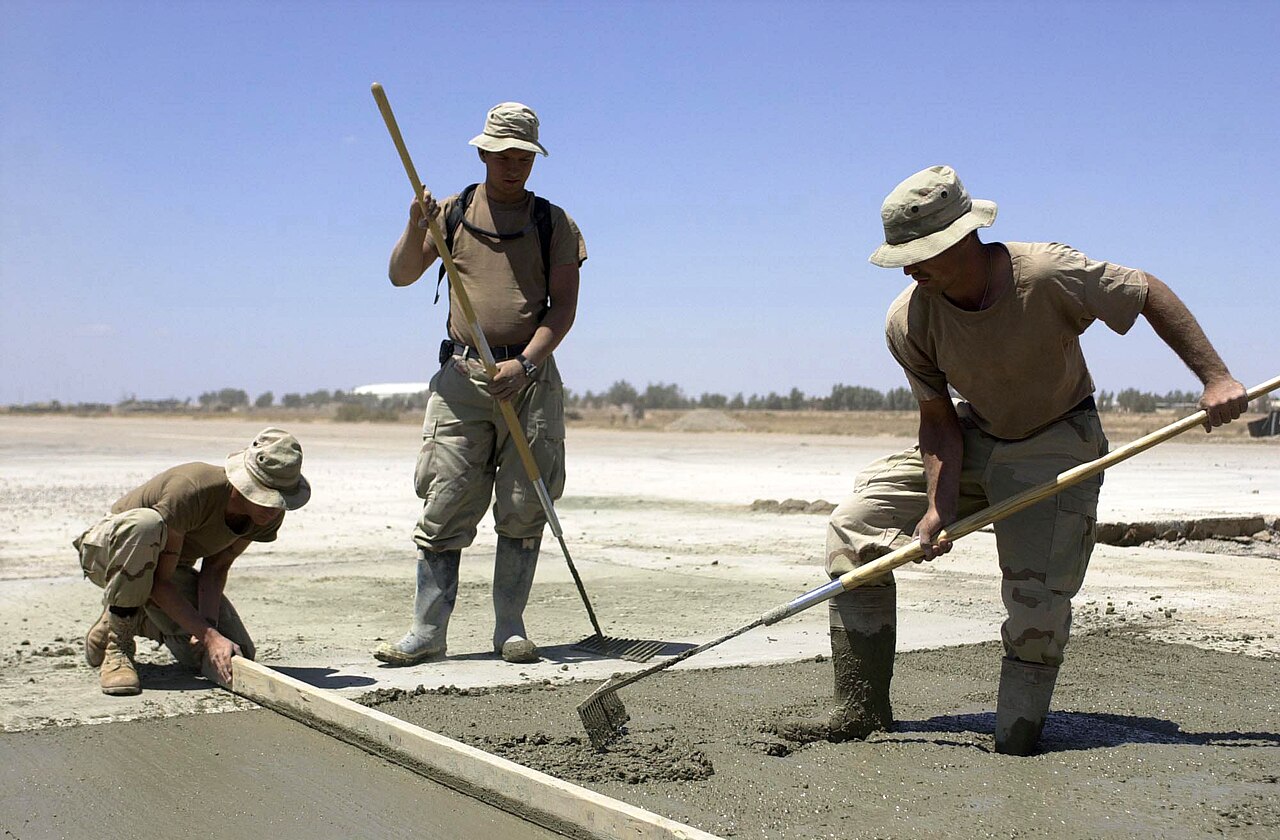
- The pour — concrete is placed, levelled and floated, colour hardener goes on, and in a fairly narrow window the stamps are pressed in with the release agent. Timing is everything here, which is exactly why this is a poor DIY candidate.
- Curing and sealing — the slab is kept damp or covered so it hardens evenly instead of drying too fast in the sun, then cleaned and sealed to lock in colour and add slip resistance.
Rough timeline, weather permitting:
| Stage | Typical timing |
|---|---|
| Walkable | Within a couple of days of the pour |
| Ready for vehicles | About a week |
| Small patio, start to finish | A few days |
| Full driveway, start to finish | A little longer than a patio |
| Resealing interval | Roughly every 3–5 years |
| Expected life with upkeep | 20 years or more |
Auckland rain has a habit of nudging pour dates around, so build a bit of flexibility into the schedule.
We’d rather move a pour by a day than force it in the wrong conditions. Stamping needs the slab at exactly the right stage of set — too wet and the pattern closes up, too firm and it won’t take a clean impression — and hot, windy or wet weather all shift that window. That’s the real reason we treat stamped work as a job for a crew that pours it regularly rather than a weekend project.
Why we say local knowledge beats the lowest quote
Stamped concrete rewards local knowledge in ways that aren’t obvious until something goes wrong. A team that works regularly across Mount Albert and the wider Auckland isthmus already knows how the clay-heavy, volcanic soils behave, how much fall copes with a proper downpour, and which sealers actually hold up to the humidity here rather than failing in year two.
There’s the consenting side too — knowing when a job trips into Auckland Council territory and when it doesn’t saves the expensive rework that comes from guessing wrong. And there’s logistics: a nearby provider gets to site fast for the time-critical stages, is easy to reach mid-project, and is still around in a year or two if the sealer needs refreshing. In a tight-knit suburb, reputation around Mount Albert village is a strong incentive to actually do the job properly — and a local eye tends to pick surfaces that complement the neighbouring homes rather than clash with them.
Being close by also makes the after-care realistic. A sealer isn’t a one-and-done coat — it wears with sun and traffic — and someone who can come back to freshen it is what keeps a surface performing rather than going dull and porous.
What actually moves the price
Stamped concrete sits above a plain broom-finished slab and below natural stone or quality pavers, but where you land in that range depends on a handful of things:
| Factor | What it does to the price |
|---|---|
| Area and shape | Bigger jobs cost more overall but often less per square metre; tight, awkward spaces with lots of edges and curves take more labour |
| Pattern and colour complexity | A single stamp in one colour is cheaper than multi-colour work or borders that combine patterns |
| Site condition | Breaking out and carting away an old driveway, extra excavation, or tight access on a narrow section all add to the bill |
| Drainage and prep | Sorting fall, drainage channels and base reinforcement all factor in — skimping here is a false economy |
| Sealing and finish | Higher-grade sealers and added slip resistance cost more upfront but stretch the surface’s life |
Given local property values, most homeowners here treat it as a longer-term investment rather than a bare-minimum spend, and budget for proper prep and sealing accordingly. Get a written, itemised quote so you can see exactly what’s included before you sign off.
None of these are hidden charges — they’re just the parts a quick “per square metre” phone number leaves out, which is why a quote that’s dramatically cheaper than the rest usually has one of those lines quietly left off.
Keeping a stamped surface looking right
A stamped surface asks for very little, but not nothing — and the small amount of care it wants is what separates a driveway that still looks new from one gone tired early. The sealer carries both the colour depth and the slip resistance, and it’s the part that wears, so a light reseal every few years is the single habit that keeps a surface reading the way it did on day one.
- Cleaning — a garden hose and a stiff broom handle most of it, with a gentle wash for anything ground in. We’d steer clear of harsh acid cleaners, which can etch the surface and flatten the colour you paid for.
- Resealing — roughly every three to five years for most surfaces, sooner for a driveway taking daily traffic or a patio in full sun. It’s a quick job on a clean, dry slab and far cheaper than letting the finish break down.
- Shaded, damp spots — the areas under trees and along shaded walls are where moss and lichen take hold first, so those are worth cleaning before anything gets established.
Looked after this way, the twenty-years-plus lifespan in the timeline above is realistic rather than optimistic — the surfaces that fall short are almost always the ones that never saw a second coat of sealer, not the ones poured badly.
Questions we get asked before a quote
What does stamped concrete cost in a suburb like Mount Albert?
There’s no single number — area, pattern complexity, site condition and sealing grade all move it, which is why we itemise a quote rather than quote a flat rate over the phone. Given median house prices here sit around NZD 1.32 million, most owners budget for proper prep and sealing rather than the cheapest possible pour.
Can I lay stamped concrete over my existing driveway, or do I need to rip it out?
Sometimes — a sound, stable slab can be overlaid with a stamped topping. If the existing surface is cracked or lifting, removing and re-pouring gives a better long-term result. We’ll assess which path suits your site before quoting either way.
What pattern suits an original Mount Albert bungalow?
Ashlar slate and cobblestone patterns tend to sit best against 1920s frontages, while cleaner, larger-format stamps suit newer builds. Timber-look boards work well around decks and pools where a warmer tone helps.
Is it slippery when wet?
The stamped texture helps, and a slip-resistant additive in the sealer improves grip further — worth specifying for pool surrounds, steps and shaded paths that stay damp.
Will it crack, and do I need a building consent?
All concrete can crack as it cures and moves, but proper control joints, a compacted base and steel reinforcement keep it to a minimum. Most like-for-like driveways and patios don’t need a consent, but new structures, retaining work or drainage changes can — check your project against Auckland Council’s guidance at aucklandcouncil.govt.nz/building-and-consents before starting.