Last reviewed: July 2026 · How we research these costs · Research source: BRANZ
I’ve spent years pouring and replacing concrete driveways across Auckland’s inner suburbs, and the job at a client’s place off Surrey Crescent in Grey Lynn is one I ended up documenting properly, start to finish, because the client wanted the full picture before they signed off on the spend. The old drive had done its time: cracked into rafts, tilted toward the house instead of the street, and pooling water against the villa’s piles every time it rained. What follows is exactly how that job ran, what it cost, and where the surprises turned up — a useful map if you’re standing on your own crumbling drive wondering what you’re in for.
Key takeaways
- This 90m² Grey Lynn driveway replacement came in at around $27,000 incl. GST, in line with the typical Auckland range of $130–$220 per m² for broom-finish concrete.
- The old slab failed because it was laid straight onto reactive Grey Lynn clay with no compacted base and no reinforcing, so it cracked and tilted through the first wet-dry cycles.
- The base is where the job is won or lost: excavation to firm ground, geotextile, a compacted GAP20 basecourse and SE62 mesh on chairs matter more than the pour itself.
- Altering the vehicle crossing over the footpath and kerb needs Auckland Council approval and inspection — skip it and you risk ripping out finished work.
- Getting the falls right to drain water away from the villa’s timber piles, rather than back at them, was critical on this older section.
- Curing timeline: foot traffic after 2–3 days, light vehicles after 7 days, full weight after the 28-day cure.
In this guide
- Working out why the old slab cracked
- The vehicle crossing sign-off you can’t skip
- Breaking out the old concrete on a tight section
- What went into the new base
- Pour day: two truckloads and a broom finish
- How long before you can park on it
- What a 90m² Grey Lynn drive actually cost
- Questions I get asked about driveway replacements
| Location | Surrey Crescent, Grey Lynn, Auckland |
| Area replaced | 90m² |
| Total cost | $27,000 incl. GST |
| Typical Auckland rate | $130–$220 per m² for broom-finish concrete |
| Concrete used | 25 MPa, two truckloads |
| Full cure to rated strength | 28 days |
Working out why the old slab cracked
Before any demolition, I needed to know why the old drive had failed the way it had. It had been laid straight onto Grey Lynn’s reactive clay with no proper base and no reinforcing, so it cracked and shifted the first time the ground went through a couple of wet-dry cycles. That’s the pattern I see over and over on these old inner-city sections — like a lot of Grey Lynn’s villas, built on timber piles in the early 1900s, this one was sitting on ground that moves more than most people realise. It told us straight away that the new slab needed a proper compacted base and steel, not just a thicker pour of concrete.
The vehicle crossing sign-off you can’t skip
The other thing to sort before anyone lifted a spade was the vehicle crossing — the section of driveway that crosses the footpath and kerb onto the road. That strip is council-controlled land, not private property, and altering it needs a vehicle crossing approval from Auckland Council. We confirmed the requirements through Auckland Council before starting, because the crossing has to meet their spec and pass inspection. Skip that step and you can end up ripping out finished work to redo it properly — an expensive way to learn the rule.
Breaking out the old concrete on a tight section
Getting the old drive out on a narrow Grey Lynn section is half the battle on a job like this. There’s no room for a big machine, so it came out with a mini-excavator and a lot of barrowing to the truck. That part’s slow, but it’s the base underneath that decides whether the new driveway lasts fifteen years or fifty.
What went into the new base
This is the bit nobody photographs but it’s where the job is actually won or lost:
- Excavate to depth: down past the soft clay to firm ground, roughly 150–200mm below finished level.
- Geotextile cloth: laid over the clay to stop it pumping up into the aggregate — cheap insurance on Auckland clay.
- Compacted GAP20 basecourse: at least 100–150mm, plate-compacted in layers. Single most important part of a driveway that doesn’t crack.
- Reinforcing mesh: SE62 mesh set on chairs so it sits mid-slab instead of resting on the ground.
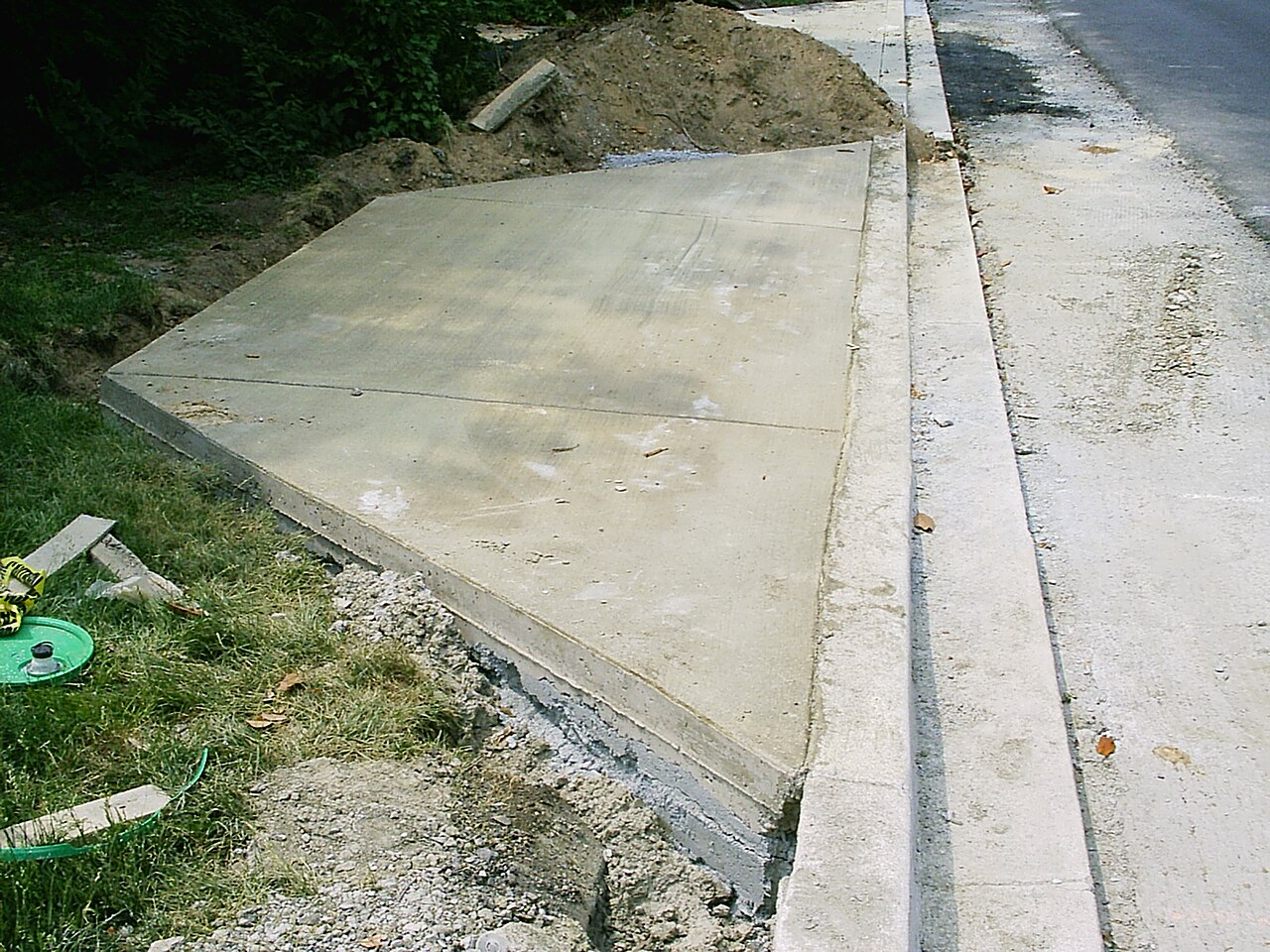
- Boxing and falls: set to drain water away from the house and toward the street, with a channel drain across the crossing.
Getting the falls right mattered a lot here, because the old drive had been draining the wrong way for years — straight back at the villa’s piles. If you want the full explanation of why the ground under these sections moves the way it does, I’ve written more on how Auckland’s clay soil affects your concrete slab.
Pour day: two truckloads and a broom finish
The pour itself is fast and unforgiving — there’s no redoing it once it’s down. The 90m² drive took a single morning: two truckloads of 25 MPa concrete pumped in, screeded, floated, and given a broom finish for grip on Grey Lynn’s slope. Control joints were cut that same afternoon at regular spacings, so the shrinkage cracks that are always going to happen land in straight, hidden lines instead of scattering randomly across the surface. After that, it was left alone. The crew on this one, a local Auckland driveway company, kept it damp and covered for the first few days rather than letting a burst of spring sun flash-dry the top and weaken it.
How long before you can park on it
This is where clients get impatient, and where I’ve seen good pours get damaged by someone parking too soon. You can walk on a new slab after a day or two, but it’s nowhere near full strength yet.
| Foot traffic | After 2–3 days |
| Light vehicles | After 7 days |
| Full weight / heavy loads | After 28 days, once rated strength is reached |
The client parked on the street for a week rather than pulling straight onto the new drive, and it saved the surface from early tyre scarring while the concrete was still gaining strength.
What a 90m² Grey Lynn drive actually cost
Done properly, with a full base, mesh, and a new vehicle crossing, the total for this job came in around $27,000 including GST. As a broader guide, expect $130 to $220 per m² for a plain broom-finish concrete driveway in Auckland, with the base work and site access driving most of the variation between jobs.
| Demolition and cart-away of old drive | $3,500 |
| Excavation, geotextile and compacted base | $6,500 |
| Mesh, boxing and prep | $3,000 |
| Concrete supply, pump, place and finish | $10,000 |
| Vehicle crossing and channel drain | $4,000 |
Coloured or exposed-aggregate finishes add roughly $30–$70 per m² on top of a plain broom finish. This client stuck with broom finish and put the difference into getting the base right instead — exactly the call I’d make on Grey Lynn clay.
Questions I get asked about driveway replacements
Do I need council approval to replace a driveway in Auckland? The slab itself on private land usually doesn’t need building consent, but the vehicle crossing over the footpath and kerb does need Auckland Council approval and inspection. If you’re only replacing the private portion and leaving the existing crossing untouched, you may not need it — but confirm with the council first. It’s a quick check that avoids expensive rework.
How long before I can park on a new concrete driveway? Keep foot traffic off for two to three days, light vehicles off for a week, and heavy vehicles off until the 28-day cure is complete. Concrete gains most of its strength in that first month, and parking too early is the fastest way to scar or crack a fresh slab.
Why did my old driveway crack so badly? Almost always a poor base. Grey Lynn’s reactive clay swells and shrinks with moisture, and a slab poured straight onto it with no compacted basecourse or reinforcing has nothing to resist that movement. A proper 100–150mm compacted base, geotextile and steel mesh are what stop the new drive going the same way.
Can a cracked driveway be repaired or resurfaced instead of replaced? Sometimes — surface cracks and cosmetic damage can be patched or resurfaced. But once a slab has tilted, is pumping clay at the joints, or is pooling water back toward the house like this one was, that’s a base failure, not a surface problem. Resurfacing over a bad base just hides the crack for a year or two before it comes back.
What does a driveway replacement cost in Auckland? For a straightforward broom-finish concrete driveway, budget $130 to $220 per m². This 90m² Grey Lynn job, including a new vehicle crossing and full base, landed at $27,000 including GST — toward the higher end because of the compaction work and crossing renewal.
Do older Grey Lynn villas need anything different done for a new driveway? Mostly it’s about the falls. Villas from this era typically sit on timber piles close to ground level, so if the drive slopes the wrong way, water ends up pooling against the piles instead of running to the street. Setting the boxing and falls to drain away from the house is a small detail that matters more on these older sites than on a newer build. Getting those falls right is the part worth paying for, and Auckland concrete contractors will set the levels off the subfloor vents before any formwork goes down.